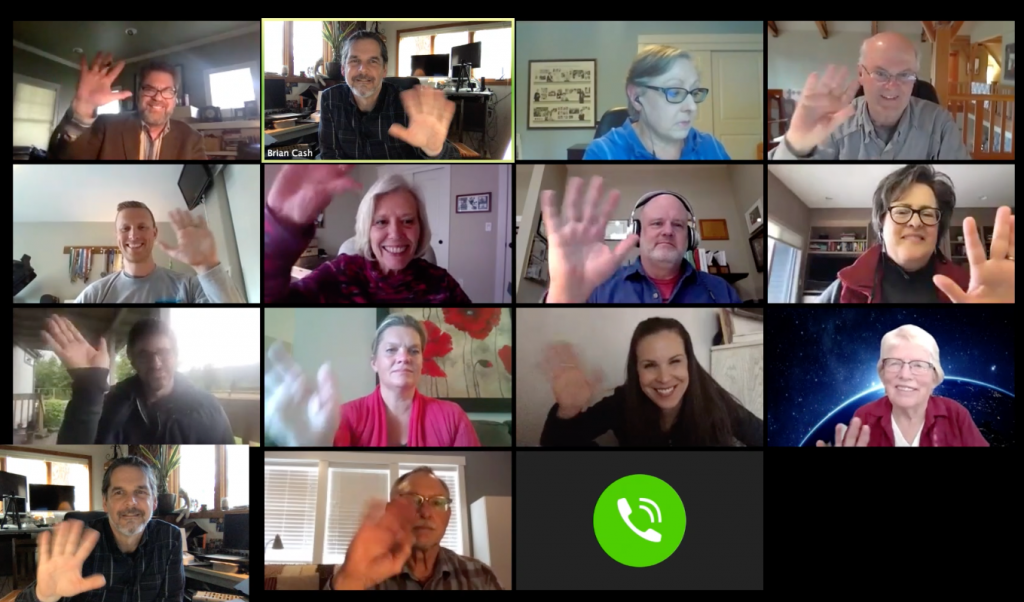

Mar 29th: The Practice of Embracing the Unknown, with Rev. Sharon Edwards.
A Part of the Series:
Rev. Sharon Edwards

Other Articles in:
WATCH:
The Practice of Embracing the Unknown with Rev. Sharon Edwards. Series: Life as Pilgrimage, Lent 2026 A Spacious Christianity, First Presbyterian Church of Bend, Oregon. Scripture: Mark 4:22-42.
We are invited to go deeper than just being uncomfortable. Pilgrimage calls us to a radical sense of mystery. God works in ways we don’t understand. We encounter synchronicities along the way. We have to release our goals and hopes for what the end of the journey will look like.
Transcript:
Sharon Edwards: I’m wondering, are you one of those crystal ball people? You know the ones, the ones who almost always know I mean, have you ever said out loud I knew that would happen, or said to yourself, I knew he would do that. I knew she would say that I’m like that. Sometimes people do something, and I just expect them to keep on in that same lane, or keep on operating out of that same box. We know exactly what we would do if, say, we got cancer or lost a loved one or had a child who was far from normal. We look upon other people’s lives and decide what we would do if we were in their shoes, there is a certain kind of comfort in this kind of knowing. We don’t have to be surprised life goes along in a particular way because we expect it to, and even God just continues to limp along in our one way street of who we’ve decided God will be, until we actually find ourselves there where we thought we would Know and find out we do not know at all, or perhaps you are someone who has had the case of the nevers I know I have. They can sneak up on us at any time, or be that quiet, constant companion that all of a sudden bursts out with surprising volume. I would never do that. I would never say that. I would never ever think that. I would never yell at my child. I would never be unfaithful. I could never forgive thus and such. I would never do that, no matter how desperate I was. I would never allow myself to I would never, ever just I would never, until perhaps one day we come awfully Close, or we do. That’s what happened to Peter, the rock loyal disciple. He was the one who always seemed to know who Jesus was and what he was about. Peter is mentioned more than any disciple by name. He often was a spokesperson for the disciples. Jesus speaks to Peter more than any of the 12. Peter was the exuberant witness to the transfiguration, and wished to prolong it. He was also the brave, at least for a while, the brave one who stepped out and walked upon the water for a bit. At one point, Jesus offered the disciples an opportunity to leave the inner circle, to no longer follow him and return home. Peter’s response, where else will we go? You alone have the words of eternal life. So there is Peter. Loyal, steadfast. Peter going along with it all until he didn’t. Jesus has entered the holy city of Jerusalem, rather than a tall, strong steed. Jesus rides a donkey, some say, a white donkey as foretold of the Messiah by the prophets, rather than a gold lined pathway and accompanied by the Royal might of soldiers. Palm branches carpet his path and the ordinary folks greet him. With cheers. Once chased out of town, he is now celebrated and welcomed. After the event, Jesus is alone with his disciples, and they share a simple meal, but it becomes a sacred one. Jesus equates the bread with his own body and the wine with his own blood. So much for knowing what the Seder was about. All of a sudden, the disciples enter a different place and space, and even though Jesus had told them of the coming events, they got a bit stuck by their own knowing. In the midst of what could have been a celebratory dinner, Jesus announces he will be betrayed by one of his own. Here it is recorded in Mark 1427, to 31 Then Jesus said to the apostles, all of you will have your faith shaken, for it is written, I will strike the shepherd and the sheep will be dispersed. But after I have been raised up, I shall go before you to Galilee. Peter said to Him, even though all should have their faith taken, mine will not be Then Jesus said to him, amen, I say to you this very night before the cock crows twice, you will deny me three times. But Peter vehemently replied, Even though I should have to die with you, I will not deny you. However, when the crucial time comes for Peter to stand beside Jesus, Peter first falls asleep in the Garden of Gethsemane, and later denies he ever even knew Jesus at all. All four gospels record Peter’s denial, whether it is to a servant girl, he proclaims he is not a follower or other random bystanders in the inner courtyard of the Palace. Three times, Peter does what he said he would never do betray Jesus, when Peter realizes, with the help of a crowing rooster that he has done what he swore he would never do. We are told that Peter weeps this I’ll never, because I know I would never. One weeps in sadness regret, humility. After Jesus’ resurrection, Jesus would come to his disciples for a fish fry. They would gather around a fire and eat together, and then Jesus would ask Peter three times, Peter, do you love me? I wonder about Peter in that gathering. I imagine him jumping at the opportunity to try again. Peter would say, yes, and Jesus would respond each time with Feed my sheep. Jesus did not need to ask him the same question three times, but perhaps it was a reminder of Peter’s failing and an opportunity to begin anew. After Pentecost Peter became a bold preacher in Jerusalem performing miracles and advocating for the inclusion of the Gentiles into the faith, he would work and feed and die for love, he will be the one who does not run away when the wolves come and they do come. So what is our invitation? As we. Hear the story of Peter today, I am going to focus upon one possibility. Let us cultivate the practice of embracing the unknown. What does that look like? Susan Beaumont is a spiritual director and a coach working with corporate academic and spiritual communities, and she offers this perspective, the shift from knowing to unknowing begins with a decision to become suspicious of our own thinking. Our thinking minds are captured by our ego. But unknowing is not the same as ignorance. To adapt an unknowing stance, we do not abandon knowledge. We learn to view our own knowledge with some suspicion. There may be times when we set it aside in service to being led into the unknown. If we are overly reliant on what we believe we know, we are not open to the presence of God and the mystery of our faith and the need for awe and the beauty of wisdom unknowing, she says, requires a personal spiritual centeredness and confidence that God will lead if given the opportunity to do so. How do we live then, with this space of knowing and not knowing when we know ourselves and yet are humble enough to know we are still mystery parts of ourselves we may still not know or understand where We, like Peter, will need to weep in sadness or regret or humility. There we will be met by Jesus, who will not leave us, and even more, will offer us new life again and again, and we know others, and yet at times, are rather rudely reminded there are places and spaces within them that we cannot know, Aliens, creatures whom we nevertheless work to love, the practice of embracing the unknown leads us into a new relationship with others. In humbleness, we free people from what we think we know about them, and end up finding new ways to actually know them more deeply, and what of God, so known in the person of Jesus, so evidenced in the power and creativity of the Spirit and yet still unfathomable mystery of unknownness. We in embracing the unknown of God, we realize that any image or pronouncement we can ever make is much too small to contain the divine. There and then, we arrive at a place of profound truth. God is not a set of concepts to be understood, but a relationship to encounter. So how do we live in this world with what is known and unknown? There is some wisdom in one of my favorite poems entitled when people ask by Rosemary watola tromeri, I want a word that means okay and not okay, more than that, a word that means devastated and stunned with joy. I want the word that says, I feel it all, all at once. The heart is not like a song bird singing only one note at a time, more like a Tuvan throat singer, able to sing both a drone and. Simultaneously two or three harmonics above it, a sound the Tuvan say that gives the impression of wind swirling amongst the rocks the heart understands swirl how the churning of opposite feelings weaves through us like an insistent breeze, leads us wordlessly, deeper into ourselves and blesses us with paradox, so we might walk more openly into This world so rife with devastation, this world so ripe with joy, the heart understands swirl. I love that line. It speaks of a knowing that comes from the heart, from the place of spiritual intuition we all have, if we just would stop and listen friends in the days ahead, let’s let go of our I would never and let’s let loose of all our I knows there is hope for us in our clinging to certainty and comfortable complacency and fearful denial, there is new beginnings for the part in each of us that has failed, repeatedly chosen easier paths and heard the cock crow over our failings. We too can love, courageously, caring, tending, feeding and showing in word and deed the relentless, abundant life giving love of God, let us pray. Holy One, you must have a wonderful sense of humor as you watch our never and our nose roll rapidly from our mouths. Loving one, you must weep as you watch the ways our knowing creates relationships of violence and hatred and harming all Creation Risen One we trust you haven’t but we ask anyway. Do not give up on us, infuse us anew with your life. Giving love, teach us to embrace the unknown with hope and trust and together we say amen.
Related Ministries: